



Here’s a number that should change how you think about marketing your tours: returning customers spend roughly 67% more than new customers over their lifetime, according to research from Business.com. Yotpo’s data puts the gap even wider, finding repeat customers spend roughly 3x what a first-time buyer does.
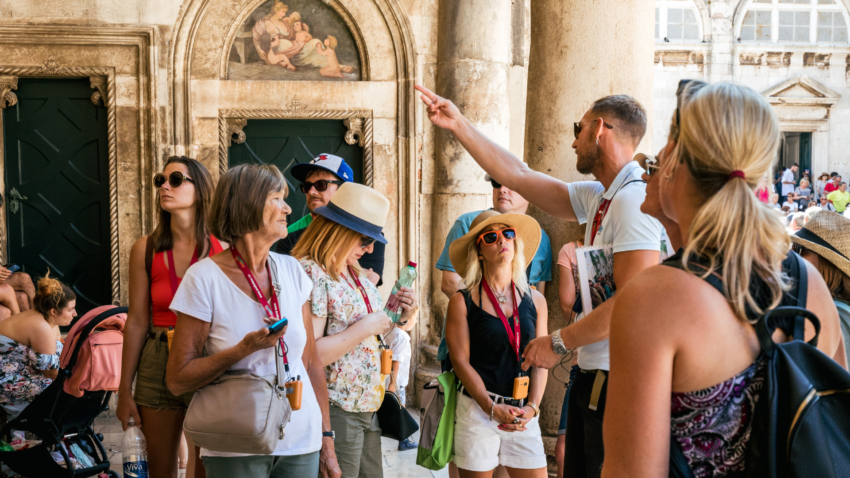
Yet most tour operators spend the vast majority of their marketing budget chasing new guests while neglecting customer retention strategies. Social ads, OTA listings, search visibility, all pointed at people who’ve never heard of you, when a pool of already-sold, already-experienced, already-happy guests is sitting right there.
To earn that valuable repeat business, you don’t need to abandon new customer acquisition. You just need to avoid treating the end of a tour as the end of the relationship.
Why repeat business matters more in tourism
The economics of tour and activity businesses make customer retention strategies especially important. Your acquisition costs – the OTA commissions, the ad spend, the time spent on listings – apply to every new guest you win. A returning guest skips most of that. They already know your brand, they’ve had a good experience, and they need a fraction of the convincing.

And in tourism, “repeat business” is broader than it first appears. The obvious case is a guest who loved your kayak tour and books again on their next vacation. But it also includes:
- A guest who does your city walk on Monday and books your food tour for Wednesday
- A guest who buys a gift card for a friend or family member after their experience
- A guest who refers five people from their social circle because they can’t stop talking about what you do
- A guest who writes a glowing review that drives new bookings for the next three years
All of these generate revenue without the full cost of finding a brand-new customer. The strategy for capturing each one is slightly different, but the starting point is the same: you have to continue the relationship after the tour ends.
Start with the experience itself
Repeat business is all about the experience. No matter how engaging your follow-up emails get, they can’t make up for a forgettable tour or a bad experience.
Focus your customer retention efforts on making each guest’s initial experience something truly special. Personalization goes a long way toward making a guest feel welcome. Just as fancy restaurants might do a little detective work to find out how to make a special guest’s experience shine, your guides need to be skilled at listening to guests, asking the right questions, and using that information to make guests feel cared about.
Consider the best moments of your experience, too. Which ones make guests pull out their phones (for photos, not scrolling) every time? Those are the moments to polish.
If you can harness those moments and end the experience on a high note, you’ll win back more customers without much more effort.
Rezgo tip: Your booking process can help. Use custom booking fields to ask for optional details about your guest’s group and reasons for visiting. This will to give your guides and instructors a head start on providing a personalized experience.
Follow up after every booking
The 24-48 hours after a tour is the most powerful communication window you have. Guests are still in the glow of the experience. It’s when photos are being edited, stories are being told, and emotions are still running high. That’s when a well-timed follow-up will land the best.
A good post-tour email does two things that benefit your customer retention strategy: it thanks the guest genuinely, and it creates the next step. That might be an invitation to leave a review, a link to book another experience, or simply a reminder that gift cards are available for anyone they want to share the experience with.
What it should never be is a wall of links or a promotional blast. Focus on one primary ask per email. If you’re going to invite a review, make that the only thing in the message. If you’re going to offer a returning guest discount, lead with that. Splitting the ask between three different CTAs can mean that none of them land.
Customer care tools like Rezgo automate this follow-up sequence so it happens for every booking without anyone on your team having to remember to send it.
Ask for reviews at the right moment
The timing of a review request matters more than most operators realize. The psychological research on peak-end theory – the idea that people remember experiences primarily by their emotional peak and their ending – tells us that the last few minutes of a tour are disproportionately important to how guests remember the whole thing.

That means two things for your customer retention strategy:
End the tour on a high. Whatever the final moment is – a story, a view, a shared experience – make it the best moment of the day. Don’t end with logistics (“okay, the bus is over there, see you later”). End with something memorable, and give it time to land.
Ask at the emotional peak, not hours later. A review request sent the next morning competes with email inboxes, work, travel stress, and the fading warmth of the experience. A request made in those final glowing minutes, or in a text message shortly after drop-off, catches people when they most want to share.
For more on why customer service is the key to online reviews in tourism, Rezgo’s blog covers the connection in depth.
Give guests a reason to book again

The most direct path to repeat bookings is making it easy and obvious. That means having a second experience worth booking, and putting it in front of guests at the right moment.
Multi-experience packages work well for guests staying in your area for a few days. If you run a city history walk and a food tour and a sunset kayak, a package that bundles two of them at a slight discount gives guests a reason to extend their time with you. It also shifts them from “one experience” customers to “this operator is part of my trip” customers – a very different relationship.
Loyalty perks make sense for operators who serve a significant local or regional audience. A family that does your haunted history tour in October might come back for a holiday lights tour in December if you give them a reason to. The mechanic doesn’t have to be complex: a simple “returning guest discount” code sent before your next season is enough.
Early access to new tours rewards loyalty with exclusivity rather than just a discount. Let past guests book new experiences before they open to the general public by leveraging your booking software’s private listings. This lets them feel like an insider, which is a different (and more impactful) incentive than a percentage off.
Gift cards: the often-overlooked revenue tool
Gift cards sit at the intersection of immediate revenue and future bookings. When a guest buys a gift card for someone they love, you collect payment today and gain a new customer when the gift is redeemed – usually one who arrives pre-sold on the experience because someone whose opinion they trust already loved it.
The trick is making gift cards easy to find and easy to give. A link in your post-tour email, a sign at check-in, a mention from your guide near the end of the tour – all of these work. Most operators underuse gift cards because they don’t actively promote them in the moments when guests are most likely to buy.
Just remember not to think about your gift card guests as people who haven’t even paid. They’re actually a critical piece of your customer retention strategy. Someone booking with a gift card is very possibly someone who’s heard glowing things about your experiences – and someone whose own review may make or break your relationship with an already-loyal customer. That makes their booking worth noting, and it makes them worth a little extra attention.
Rezgo supports gift card sales as part of its front-end booking platform, so guests can purchase them directly online without any extra setup on your end.
Use reviews and referrals as a retention loop
A guest who refers a friend to your tour is worth more than their original booking. They’re providing a personal endorsement – the most trusted form of marketing – to someone who already has travel intent and social trust in the person recommending you. You literally can’t pay for that kind of marketing, because its authenticity is part of its impact.

The easiest way to build referral momentum is to make it explicit. After a great experience, most people are happy to recommend you. They just don’t think to do it unless someone asks. A simple ask from the guide at the end of the tour (“if you loved this, we’d be grateful if you mentioned us to anyone coming to the area”) builds a human connection that works. A follow-up email with a “share with a friend” message and a referral code works even better when paired with that original ask.
“Investing in guide training pays for itself through tips and repeat customers. Cheap training means high turnover and mediocre reviews – and you lose both the review benefit and the referral chain.”
- Tour operator, via an industry community discussion
The referral chain (or retention loop) is what it sounds like: a connection between one happy guest and the ones who come after. It’s also a big deal, and it’s integral to your customer retention strategy. One enthusiastic guest who talks about your experience in their social circle can generate bookings for years. Building the team and the experience quality that earns those referrals is the foundation everything else sits on.
Other ways to stay top of mind
The guests who visited once and loved it are a warm audience you can re-engage over time. An email list of past guests is genuinely valuable. More so than a social following, because you own the data and the contact.
The key is giving people something worth opening. A seasonal “what’s new” update that includes a genuinely interesting piece of local information. A “we’re launching something new and wanted to tell our past guests first.” A “here’s what your experience looks like this time of year” with a compelling photo. These emails don’t need to be frequent (quarterly is enough, or less if you’re seasonal) but they need to be worth the inbox space.
What doesn’t work: newsletters that are thinly-veiled promotional blasts with no editorial value, or AI-written emails that no one bothers to review before sending. A lack of care shows, and you’ll wind up unsubscribes when you wanted a stronger connection. Guests who had a great time with you will happily stay in touch if you treat that relationship like a real one.
Make rebooking easy
Friction kills repeat business. Make sure you’re giving past customers the tools they need to book easily. Sending direct booking links to the experiences they’ll love are one way to reduce friction. Another is having a mobile-friendly booking flow. Your happy customers want to book with you again – your existing connection already reduces the emotional friction of shopping around. So capitalize on that by using a booking system that makes it easy for them to convert.
Try Rezgo
These customer retention strategies only work if you have the operational foundation to execute them consistently. Follow-up emails need to go out for every booking, not just the ones you remember. Guest data needs to be stored in a way you can actually use it. Review requests need to be timed correctly, not sent whenever someone gets around to it.
Signing up for Rezgo gives tour operators that foundation:
- Automated post-booking communications
- Verified guest reviews tied to actual bookings
- Gift card sales
- Promos for returning guests
And of course, the guest data you need to build a real retention strategy.
The operators who enjoy real repeat business aren’t doing anything magical. They’re just treating the end of a tour as the beginning of the next relationship, and they have the tools to do it at scale.
Frequently Asked Questions
What are the most effective customer retention strategies for tour operators?
The highest-impact customer retention strategies for tour operators are: sending a personalized follow-up email within 24-48 hours of the tour, asking for a review at the peak emotional moment (the final minutes of the experience), creating multi-experience packages or seasonal passes that give guests a reason to rebook, and offering past guests early access or exclusive pricing on new tours. Tools like Rezgo that automate post-booking emails and store guest data make all of these much easier to execute consistently.
How do repeat customers in tourism differ from repeat customers in other industries?
In most industries, a repeat customer simply buys the same product again. In destination tourism, a ‘repeat’ relationship can take several forms: the same guest returning on a future trip, a guest booking a second experience during the same visit, a guest who gifts your experience to someone else via a gift card, or a guest who refers friends and family. Understanding this broader definition is what separates operators who build real loyalty programs from those who assume return visits are out of their control.
How much more do repeat customers spend compared to new customers?
The data is consistent across industries: returning customers spend 67% more than new customers over their lifetime, according to research from Business.com. Yotpo’s research also found that repeat customers spend roughly 3x more than one-time shoppers. In the tourism context, this means a returning guest is far more likely to add on experiences, upgrade, or book for a group – all without requiring the cost of acquisition you’d spend on a new booker.
Is it worth setting up a formal loyalty program as a tour operator?
Not necessarily. A formal loyalty program adds complexity and can be hard to manage at small or medium scale. The operators who see the best retention results often use simpler approaches: a ‘welcome back’ discount code sent 6 months after a visit, early access to seasonal tours for past guests, or a referral incentive that rewards guests for bringing friends. Rezgo’s platform supports gift cards, promotional pricing, and guest data management – so you can build meaningful repeat-booking incentives without needing a full loyalty system.
How do I get repeat bookings when my guests only visit my destination once?
Repeat business in destination tourism isn’t just about the same person returning – it’s about turning one guest into a source of ongoing revenue. Focus on: encouraging multi-experience bookings during their current trip, selling gift cards they’ll give to friends, building referral incentives that reward them for sending new guests your way, and staying in touch via email so that when they or someone they know visits again, your operation is top of mind. Automated post-booking emails through Rezgo keep you connected long after the tour ends.

Written By | Rahul Collins


Search The Blog
Categories
Most Popular Articles
- 16 Innovative Tourism Business Ideas and Trends for 2026
- Luxury Travel: 6 Key Trends That Are Dominating the Market
- Your Tourism Marketing Mix: the 7 Ps of Travel and Activity Marketing
- Global travel trends 2026: What tour and activity operators need to know
- Tour product manager, service providers, and more in Rezgo 7.0