


In This Article…
Most tour operators track a lot of numbers. Website traffic. Social followers. Email subscribers. Inquiry volume. Sometimes it can feel like you need three dashboards, five spreadsheets, and at least one extra coffee just to figure out whether your business is actually growing.
The reality for many tour businesses is they are measuring activity instead of actual performance.
While a spike in website visits might feel encouraging, if visitors aren’t booking tours and activities, your business isn’t growing. When it comes to social, thousands of social media followers won’t necessarily help profitability if your tours are running half full.
The tour operator KPIs (Key Performance Indicators) that truly matter are the ones tied directly to revenue, efficiency, customer retention, and long-term sustainability. These metrics help you answer questions like:
- Are your marketing efforts actually generating bookings?
- Are your tours priced effectively?
- Which experiences are driving repeat business?
- Are you growing sustainably?
By focusing on the right travel business KPIs and tour operator metrics, you can make smarter decisions around pricing, marketing, staffing, and operations, and build a more predictable business.
In this guide, we’ll break down the tour operator performance indicators that actually predict growth and run through how to improve them.
Why tour operators need the right KPIs (not just more data)

If your tour company is like most tour businesses, it generates enormous amounts of information every day. Booking systems, websites, payment processors, advertising platforms, and review sites all produce valuable data. But what do you actually do with all that data to improve your business?The right KPIs are the key to knowing which numbers actually matter.
A KPI is a measurable metric tied to business performance and strategic goals. Good KPIs help you make better decisions, while poor KPIs tell you very little that’s useful.
For example, getting 20,000 website visitors sounds impressive. But if your booking conversion rate doesn’t change, that traffic alone won’t grow your revenue. Meanwhile, a modest increase in the conversion rate or average booking value can significantly improve your bottom line without increasing marketing spend.
That’s why successful tour operators focus on predictive growth metrics rather than “vanity metrics.” Vanity metrics are fun to look at, but they don’t necessarily predict business performance. They include:
- Social media followers
- Post engagement
- Website traffic
- Email list size
Growth-focused tour operator metrics are different. They measure efficiency, profitability, and customer retention. Examples include:
- Booking volume
- Occupancy rate
- Booking conversion rate
- Customer acquisition cost
- Customer lifetime value
- Average booking value
Put together, these tour company growth metrics provide a much clearer picture of how your business is actually performing.
The difference between activity metrics and growth metrics
Put simply, activity metrics, including some of the examples above, show effort while growth metrics show results. It’s an important difference, as many tour operators spend too much time optimizing for visibility in their marketplace instead of profitability.
For example, increasing Instagram reach may improve awareness, but it doesn’t necessarily lead to more bookings. Or, a growing email list may look great on paper, but if subscribers never convert, it has limited actual bottom line impact.

Activity metrics have value, but they rarely predict long-term business success on their own.
Growth metrics, on the other hand, are directly tied to revenue generation, operational efficiency, and customer retention.
The most successful tour operators use both, but prioritize the growth metrics most closely tied to sustainable growth and profitability.
Key KPIs that matter to your tour business
Booking volume (demand for your tours)
Booking volume is one of the clearest indicators of demand for your tours, and one of the most important tour revenue metrics for growing operators. It measures the total number of reservations your business receives over a specific period.
Consistent increases in booking volume signal:
- Stronger brand visibility
- Effective marketing
- Growing demand
- Improved reputation and referrals
Tracking bookings over time can also help identify seasonal trends, high-performing tours, and revenue forecasting opportunities. For many operators, it’s the first visible sign of a growing and more profitable business.
Booking volume only matters if the bookings are profitable and operationally sustainable. Aggressive discounting, for example, may increase reservations while reducing margins. Likewise, high advertising spend can inflate booking numbers but also drive up customer acquisition costs.
Once again, healthy growth comes from a balanced approach and viewing booking volume in the context of profitability and efficiency.
Tour occupancy rate (how well you fill your capacity)

Occupancy rate measures the percentage of available capacity that’s sold during a given period.
Here’s a simple formula: Occupancy rate = Seats sold ÷ total available seats x 100
This is one of the most important tour operator profitability metrics because empty seats represent lost revenue that can’t be recovered once a tour starts. Low occupancy may suggest oversupply, weak positioning, or poor demand forecasting, while strong occupancy rates typically indicate:
- Healthy demand
- Effective pricing
- Efficient scheduling
- Well-targeted marketing
How you price tours is a key factor in tour occupancy rates. Improving occupancy doesn’t always require lowering prices, and constant discounting can hurt long-term profitability and brand positioning. Instead, operators can focus on:
- Dynamic pricing
- Last-minute promotions
- Smarter scheduling
- Better demand forecasting
Successful tour businesses optimize value and efficiency, instead of simply chasing more volume.
Example: Full paddle ahead
Imagine a kayaking tour operator running three departures per day during peak season. Booking volume looked healthy, but occupancy data revealed that early morning tours consistently sold out while afternoon departures remained half full.
Instead of adding more departures, the operator adjusted scheduling and introduced a premium package for the most popular time slot that included photos and snacks. Within a season, they improved occupancy, increased average booking value, and generated more revenue without increasing marketing spend or staffing costs.
The Takeaway: Sometimes growth comes from optimizing the demand you already have.
Average booking value (revenue per reservation)
Average booking value (ABV) measures how much customers spend per reservation.
Here’s a simple formula: Average booking value = Total booking revenue ÷ total number of bookings
This KPI reveals how effectively your business maximizes revenue from each guest. Increasing average booking value is often one of the fastest ways to grow revenue. It improves earnings without significantly increasing marketing costs or operational complexity.
Higher booking values may indicate:
- Effective upselling
- Strong perceived value
- Successful packaging
- Premium positioning
Travelers are often willing to spend more when the value feels clear and seamless. Ways to increase average booking value include:
- Bundling experiences
- Offering upgrades
- Cross-selling complementary experiences
- Creating tiered packages
Booking conversion rate (how efficiently you turn visitors into customers)

The booking conversion rate measures the percentage of website visitors who complete a booking.
Here’s a simple formula: Booking conversion rate = (Number of bookings ÷ total visitors) x 100
Booking conversion rate is one of the most valuable tourism metrics. It reflects how effectively your marketing, website, and booking experience work together.
A healthy conversion rate indicates:
- Strong messaging
- Clear pricing
- Good user experience
- High customer trust
- A frictionless booking process
On the flipside, low conversion rates usually point to something wrong with the customer journey that causes some friction. This could include:
- Complicated checkout processes
- Weak mobile experience
- Slow website speed
- Poor tour descriptions
- Hidden fees
- Lack of reviews or social trust
It’s well worth working on improving your booking conversion rate tourism metrics. This can often generate faster ROI than simply increasing website traffic because you can maximize the value of visitors you already have with simple strategies.
Some effective strategies include:
- Simplifying checkout
- Improving tour pages
- Adding social proof
- Optimizing for mobile
Even small improvements in your conversion rate can create big increases in revenue over time.
Customer acquisition cost (how much it costs to get a customer)
Customer acquisition cost (CAC) is a critical growth KPI because growth only matters if it’s profitable. CAC measures how much your business spends to acquire each new customer.
Here’s a simple formula: CAC = Total marketing and sales spend ÷ number of new customers acquired
Tracking CAC helps tour operators evaluate:
- Marketing efficiency
- Advertising performance
- Channel profitability
- Long-term scalability
You might be running paid ads that generate strong booking volume. However, if acquisition costs exceed your profit margins, this growth may not be sustainable.
Reducing your CAC often means making your marketing dollars work harder and looking at other ways to generate new business. Strategies include:
- Referral programs
- Organic search visibility
- Partnerships
- Retargeting campaigns
We’re hammering home the balancing act point here, but the strongest businesses carefully balance customer acquisition cost against customer lifetime value.
Customer lifetime value (the KPI that predicts long-term growth)

Strong customer lifetime value (CLV) performance is one of the clearest predictors of sustainable growth because repeat guests are usually more profitable than first-time customers. That’s because they generate more revenue over time while requiring less acquisition spending. That makes this a critical factor for long-term success.
Here’s a simple formula: CLV = Average booking value × average number of bookings per customer.
CLV measures the total revenue a customer generates throughout their relationship with your business. Often, your best growth opportunities are already sitting in your customer database. Returning customers:
- Require lower marketing spend
- Already trust your brand
- Tend to spend more over time
- Generate referrals and reviews
A tour business with high customer lifetime value is typically more stable and scalable. Ways to improve CLV include:
- Loyalty programs
- Follow-up marketing
- Repeat traveler offers
- Personalized experiences
Example: Coming back for seconds
Imagine a food tour company relied heavily on paid social ads to generate bookings. At first glance, the campaigns looked successful because booking numbers kept increasing. But once the operator began tracking customer acquisition cost alongside customer lifetime value, they discovered many first-time guests never returned.
In response, the company launched a simple follow-up email campaign featuring returning guest discounts, local recommendations, and early access to seasonal tours. Over time, repeat bookings increased, customer lifetime value grew, and the company became less dependent on expensive advertising.
Takeaway: By focusing on retention instead of acquisition alone, the operator built a healthier and more sustainable business.
Customer satisfaction and reviews (the reputation KPI)
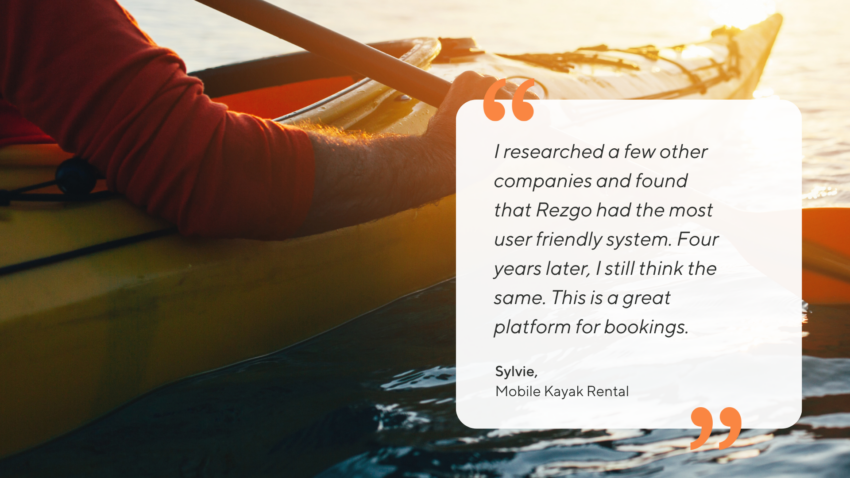
In tourism, your reputation is often everything. It directly influences revenue. Customer satisfaction metrics help measure how likely guests are to recommend your business, leave positive reviews, or book again.
Important metrics include:
- Net Promoter Score (NPS)
- Google review ratings
- Post-tour survey results
- TripAdvisor ratings
- Review sentiment and volume
Strong reviews build trust, reduce hesitation, and improve booking conversion rates. High customer satisfaction also tends to lead to:
- More referrals
- Better repeat booking rates
- Stronger brand reputation
- Lower customer acquisition costs
Review management is much more than customer service. It should be treated as part of your overall growth strategy.
Cancellation and no-show rate (protecting your revenue)
Cancellation rate and no-show rate measure how many booked customers fail to attend their tour. These metrics directly impact profitability because cancellations create revenue uncertainty and distracting business inefficiencies. Tracking cancellation patterns can uncover operational issues or customer experience gaps.
Here’s a simple formula for either: (No-show or cancelled bookings ÷ total bookings) × 100
High cancellation rates can:
- Lower occupancy
- Disrupt staffing
- Reduce profitability
- Complicate scheduling
Reducing cancellations and no-shows is possible, though. Strategies to reduce cancellations include:
- Tiered cancellation policies
- Deposits
- Reminder emails or SMS notifications
- Clear communication
.
Turning KPI insights into growth strategies

Tracking KPIs only matters if the data leads to action. The most successful operators regularly review performance data and use it to make informed decisions.
Examples of insights into growth strategies include:
- Increasing marketing spend on high-converting channels
- Refining low-performing tours
- Adjusting pricing to improve occupancy and margins
- Expanding high-value experiences
- Launching loyalty campaigns to encourage repeat bookings
Rather than trying to monitor every possible metric, focus on the ones that truly matter. A simple KPI dashboard for tour operators should highlight the indicators most closely tied to revenue, profitability, and customer retention. Again, small improvements across multiple KPIs can lead to big long-term growth.
Ready to start tracking the right tour operator KPIs?
Forget about just tracking more data. Sustainable growth comes from tracking the right tour operator KPIs in a strategic and consistent way.
The strongest tour operators focus on KPIs that directly influence:
- Revenue
- Profitability
- Operational efficiency
- Customer retention
- Long-term scalability
Start small and focus on a handful of high-impact KPI metrics like:
- Booking volume
- Occupancy rate
- Average booking value
- Booking conversion rate
- Customer acquisition cost
- Customer lifetime value
Then, review performance regularly, refine your strategy, and look for opportunities to improve over time.
You may find you don’t actually need more spreadsheets, more reports, or more vanity metrics competing for attention—or even the extra coffees to get through it all. You just need the right KPI strategy and tour operator performance indicators that give you clearer insights into what’s truly driving your growth.

Written By | Rob Mathison